
We raised $1.8 million in pre-seed funding to build something small law firms have been asking for but couldn’t quite articulate: a platform that makes their existing operations more profitable now, while giving them optionality for how they structure client relationships later.
This isn’t about forcing firms to abandon the billable hour. Most small practices aren’t in a position to flip their entire revenue model overnight, nor should they. But the firms we’ve spoken to - including Zed Law’s own practice - recognise they need better margins on the work they’re already doing, and they need a hedge against clients who are starting to demand alternatives to hourly billing. Parachute gives them both.
Stage one: operational leverage that pays for itself within a month
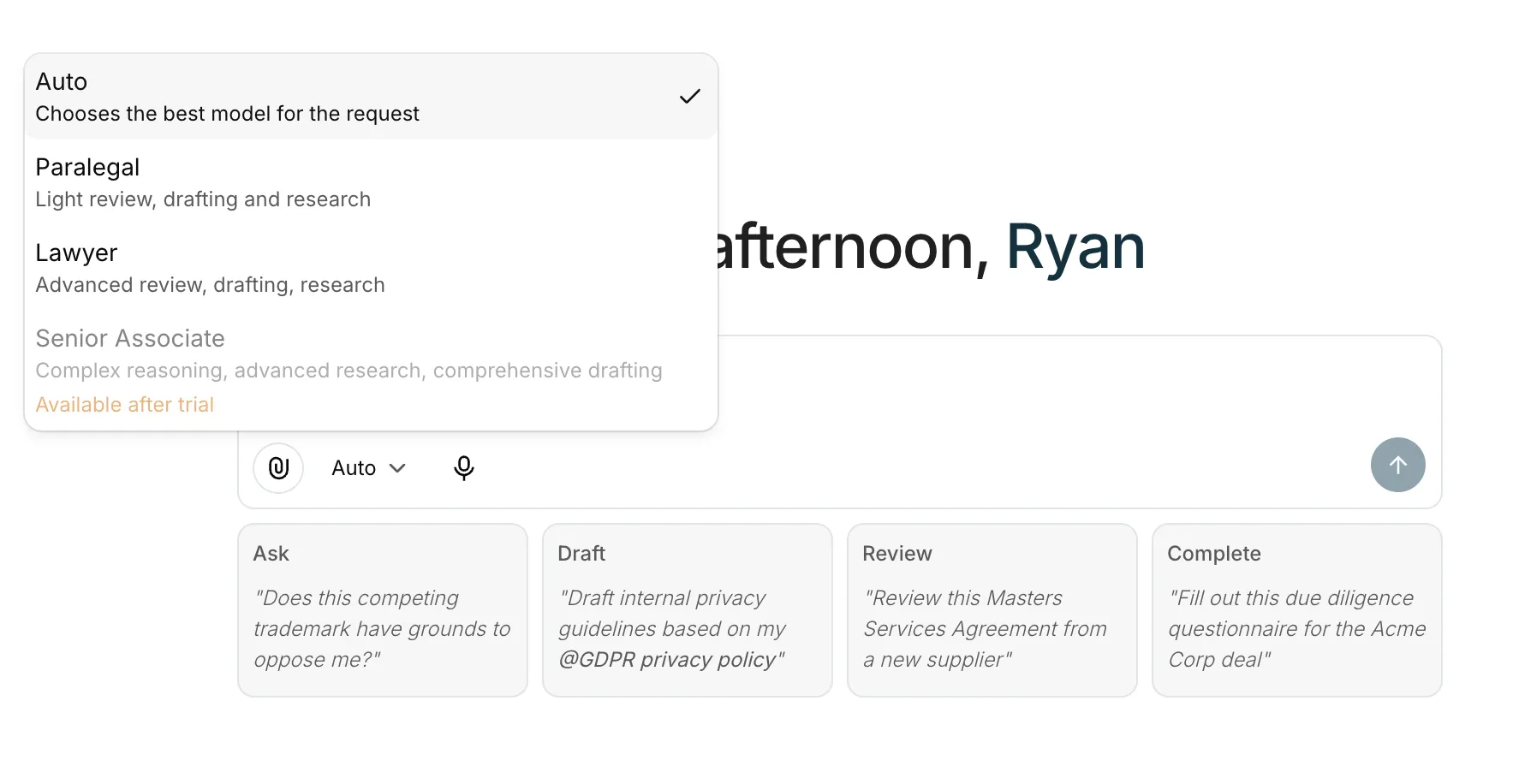
Most legal tech sits in the middle of the workflow. It helps with drafting, document automation, or research. What it doesn’t do is touch the messiest parts of running a small firm: capturing initial client instructions clearly, coordinating work between fee earners and support staff, managing version control when multiple people are collaborating, delivering finished work in a format clients can actually use, and then filing everything correctly in practice management systems that were designed for a different era.
Parachute covers the full workflow. A client submits instructions through the platform. The responsible lawyer picks up the work with context already structured. Collaboration happens in one place rather than across email threads, Slack or Teams channels, and shared drives. Document generation pulls from templates but adapts intelligently based on the specifics of the matter. Delivery is tracked and integrated back into whichever PMS the firm is using - Clio, Smokeball, or something else.
The result is that firms get more billable work done in less time, with fewer coordination errors and less administrative drag. Margins improve not because the hourly rate changes, but because the same team can handle a higher volume without additional overhead. We’re seeing firms hit measurable efficiency gains within the first month, which means the platform pays for itself before the billing cycle even closes.
If that’s all Parachute did, it would still be worth building. But it’s only the first stage.
Stage two: creating recurring revenue without the friction of traditional retainers

Some clients want ongoing legal support but have never been compelled by the standard retainer pitch: pay a fixed monthly fee for a set number of hours. The economics are opaque, the value is unclear, and clients often feel like they’re either underusing the allocation or getting shafted for overages. Hours don’t equate to value, especially when the client isn’t sure what they’re buying.
Parachute lets firms offer a different arrangement. The client gets access to the platform as an extension of the firm’s service. They can navigate straightforward legal tasks themselves - generating standard documents, managing compliance workflows, working through decision trees for common issues. The lawyer remains the human in the loop on the other side, available when the client triggers a review for high-stakes decisions or needs strategic input on something outside the platform’s scope.
The client feels empowered rather than dependent. The lawyer retains the relationship and the revenue, but shifts from executing every task to supervising execution and providing judgment where it matters. The billing model can stay hourly for complex work, or it can move to a retainer that’s actually defensible because the client can see exactly what they’re getting: self-service tools plus on-demand access to their lawyer for the calls that require expertise.
We recognise that the second stage won’t happen immediately for every firm. Some practices will adopt it within months. Others will take years. But client expectations are shifting, driven by horizontal offerings in adjacent industries where self-service plus expert oversight has become the standard. Law firms that get ahead of that shift will retain clients who might otherwise migrate to platforms that don’t include them in the loop at all. Firms that wait too long risk losing clients they’ve worked with for years because they couldn’t meet an expectation they didn’t see coming.
Why we’re the ones building this
The unique challenges of running a small law firm can only really be understood by people who’ve lived them. I spent years running in a small practice as a side-hustle before leaving a fully stacked legal team I’d helped build at VC-backed now unicorn healthcare scale-up Eucalyptus, learning to deal with the operational chaos that comes from trying to deliver high-quality work while also managing the business, keeping cash flow positive, and retaining clients in a market where larger firms have more resources and legal tech platforms are pitching direct-to-consumer models.
Firms needed better operational infrastructure, but they also needed a viable path to recurring revenue that didn’t require them to abandon their existing client base or billing practices. We’re building both because the firms that survive the next five years will be the ones that can operate more efficiently and offer clients flexibility in how they engage.
We’re using the funding to accelerate product development and expand across Australia, starting with the firms that are already feeling the margin pressure most acutely. Stage one functionality is the priority because it delivers immediate ROI regardless of billing model. Stage two is being deployed in parallel for the firms that are ready to move faster.
We’ll be sharing progress as we go: what’s working, where we’re hitting friction, and how firms are adapting the platform to their specific practices. The mission stays open. If you’re running a small firm and this resonates, we’d like to hear from you.